
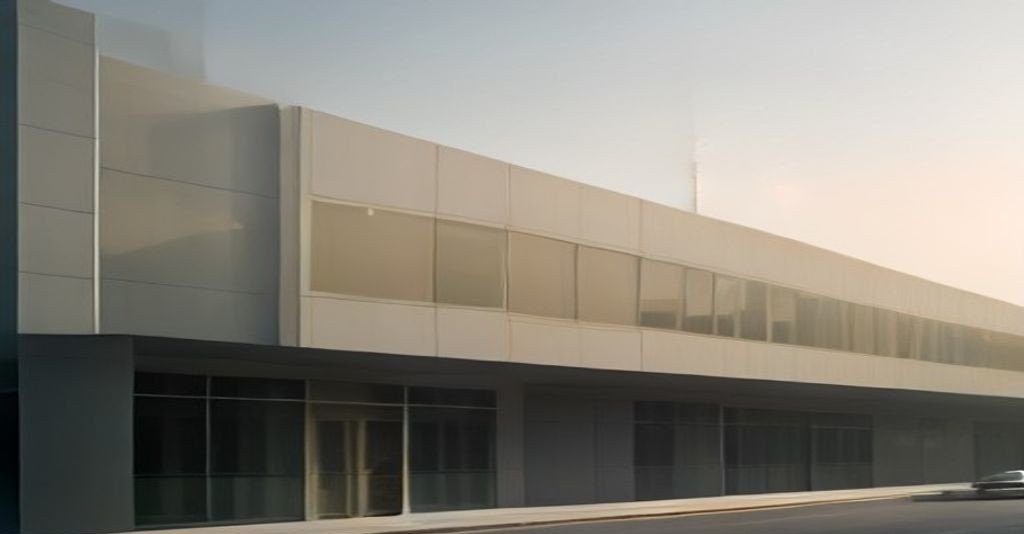
An SCO (Shop-cum-Office) plot in Gurgaon is an independently owned, DTCP-licensed commercial plot that permits the owner to build a retail unit on the ground floor and offices above it, rather than buying a ready-built unit from a developer. Demand for this format has grown across corridors such as Dwarka Expressway, Sohna Road and Sector 84 as buyers look for freehold-style commercial ownership with more control than a strata-titled shop offers. This guide sets out what an SCO plot actually is, where the genuine risks sit — registration status, GPA-based resale, and construction compliance — and how a serious investor should evaluate one before committing capital.
What Is an SCO Plot, and How Is It Different From a Builder-Sold Shop?
An SCO (Shop-cum-Office) plot is a piece of commercial land, typically 100–500 square yards, sold as an independent unit within a DTCP (Directorate of Town and Country Planning, Haryana)-licensed commercial colony or sector. The buyer — not the developer — usually carries out or commissions the construction, subject to Haryana’s building bylaws and the specific zoning plan for that colony.
This is structurally different from a “builder-sold shop” in a mall or commercial complex, where the developer constructs the entire building and sells strata-titled units (individual floors or shop spaces within one structure, similar to apartment ownership). With an SCO plot, the buyer typically holds the underlying land and has more discretion over layout, tenant mix and resale — but also carries the construction risk, cost and timeline themselves.
PropIntel’s advisory view: the SCO format suits buyers who want direct control over a commercial asset and are prepared to manage construction (or fund a contractor to do so), not buyers looking for a turnkey, immediately leasable unit.
Why SCO Plots Are Drawing Investor Interest in Gurgaon in 2026
Search and market interest in SCO plots along Gurgaon’s newer corridors — Dwarka Expressway, Southern Peripheral Road, Sohna Road and sectors in the 80s and 100s — has risen alongside residential development in these areas, since SCO belts are typically licensed to serve the catchment of the residential sectors around them. Multiple developers and brokerages are actively marketing SCO inventory in these corridors through 2026, which is itself a signal of active supply and demand, though PropIntel has not been able to verify independent, government-sourced transaction volume data for this segment — any volume claim in this article should be read as estimated opportunity, not a verified figure.
Three structural factors are driving genuine (not merely promotional) interest:
- Rising residential density along Dwarka Expressway and Sohna Road is creating retail and office catchment that did not exist five years ago, which supports the underlying commercial case for ground-floor retail and small offices in these sectors.
- Freehold-style plot ownership appeals to business owners and family offices who prefer holding land with construction discretion over a strata unit whose maintenance, façade and common-area terms are set by someone else.
- Smaller ticket sizes than a full commercial building allow investors to enter Gurgaon commercial real estate without the capital required for a pre-leased Grade A asset — see PropIntel’s due-diligence and yield checklist for pre-leased commercial property in Gurgaon for that comparison.

4BHK Builder Floor — Gulmohar Park
Speak directly with Kshitiz Verma, Principal Partner, about this mandate.
- Plot Size300 sq. yds
- Configuration4BHK
- FloorFirst Floor
- FacingNorth-West
The Legal Checks Every SCO Plot Buyer Should Complete
1. Verify the DTCP Licence and HRERA Registration Separately
A DTCP licence permits a developer to develop and sell plots in a colony; it does not, by itself, confirm that the specific project is registered with the Haryana Real Estate Regulatory Authority (HRERA). Under Section 3(2)(a) of the Real Estate (Regulation and Development) Act, 2016, a real estate project is exempt from mandatory RERA registration only where the land area being developed does not exceed 500 square metres, or the number of units does not exceed eight — and legal commentary notes real ambiguity across states on whether both conditions must be met, or either one is sufficient, to qualify for exemption. In practice, this means some smaller SCO colonies may legitimately fall outside RERA’s registration requirement, while larger licensed colonies typically do require it.
The buyer’s task is not to assume either way: search the specific project name and licence number on the Haryana RERA portal directly, and ask the seller or developer to produce the DTCP licence number so it can be cross-checked with Haryana’s Town and Country Planning department records, rather than relying on marketing collateral.
2. Confirm the Mode of Transfer — Never Rely on a GPA Alone
In resale SCO transactions in particular, plots are sometimes offered on the basis of a General Power of Attorney (GPA) rather than a registered conveyance or sale deed. In Suraj Lamp & Industries Pvt. Ltd. vs. State of Haryana (2011), the Supreme Court of India held that immovable property cannot be legally transferred through a GPA, Agreement to Sell or Will alone — only a registered sale or conveyance deed passes valid title. A GPA-based “sale” leaves the buyer without clear, registrable ownership and creates serious complications at the time of resale, mortgage or inheritance. Any SCO transaction that is structured primarily around a GPA, rather than a registered deed in the buyer’s name, should be treated as a material risk, not a convenience.
3. Check the Approved Building Plan and Permitted Use Before Construction
Because the buyer typically constructs on an SCO plot, the building plan must be approved by the competent authority (DTCP or the relevant municipal body) before construction begins, and the built structure must match the sanctioned plan and permitted commercial use (retail, office, or mixed) for that specific colony. Deviation from the sanctioned plan is a common source of compounding fees, stop-work notices, or difficulty obtaining an occupation certificate later.
SCO Plots vs. Pre-Leased Commercial Property: A Quick Comparison
| Factor | SCO Plot (self-construct) | Pre-Leased Commercial Unit |
|---|---|---|
| Income timeline | Delayed — only after construction and leasing | Immediate, if already tenanted |
| Capital required upfront | Plot cost + full construction cost | Purchase price only |
| Control over design/tenant mix | High — buyer decides | Low — inherits existing layout/tenant |
| Primary risk | Construction delay, compliance, approval risk | Tenant default, lease renewal, vacancy risk |
| Title clarity typical concern | GPA-based resale, licence verification | RERA/OC status, existing lease assignment |
For a fuller framework on evaluating tenanted commercial assets, see PropIntel’s pre-leased commercial property checklist, and for the institutional-grade office alternative, Grade A Office Space: Gurugram vs Noida for Investors.
Buyer Due-Diligence Checklist for SCO Plots in Gurgaon
- Verify the DTCP licence number independently with the Town and Country Planning department, not only from developer marketing material.
- Search the project name on the Haryana RERA portal to confirm registration status, and ask in writing why a project is unregistered if it does not appear.
- Insist on a registered sale/conveyance deed, or a registered agreement to sell with a clear, time-bound path to a conveyance deed — decline GPA-only structures.
- Obtain the sanctioned building plan and permitted use certificate for the specific plot, not a generic colony brochure.
- Check encumbrance status and any pending litigation on the land parcel before the colony was licensed.
- Get an independent estimate of construction cost and timeline; do not treat a developer’s “ready-to-lease shell” promise as guaranteed without a contract with penalty clauses.
- Confirm road width, utility connections (water, sewage, power load) and fire-safety clearance requirements for the sanctioned use.
- Model your holding cost (property tax, maintenance, vacancy) for at least 12–18 months post-construction before any rental income is assumed.
Key Risks and Limitations to Weigh
SCO plots are not a lower-risk alternative to built commercial property; they simply shift the risk profile. The main limitations are: construction and approval timelines are within the buyer’s control but also the buyer’s responsibility and cost; leasing an SCO unit after construction depends on the same catchment and footfall assumptions that apply to any retail asset, and PropIntel does not treat any asking price or projected rental as a guaranteed outcome; and resale liquidity for an under-construction or self-built SCO unit is typically lower than for a completed, tenanted asset. Buyers should also budget for the compounding or regularisation costs that can arise from even minor deviations from a sanctioned plan.
PropIntel Perspective
An SCO plot can suit a business owner who wants to occupy the ground floor for their own enterprise while leasing the upper floors, or a family office prepared to fund and oversee construction over 18–24 months. It is less suited to an investor seeking immediate, passive rental income, for whom a pre-leased asset is a closer fit. The principal trade-off is control versus timeline: SCO ownership offers more say over the asset but defers income and adds construction and compliance risk. Before proceeding, verify the DTCP licence, HRERA status and mode of transfer independently rather than relying on a broker’s assurance, and if a project cannot produce clean registration documents on request, waiting for a better-documented plot in the same corridor is usually the more defensible decision than proceeding on trust.
PropIntel advises investors and business owners evaluating commercial land and SCO opportunities in Gurgaon, including independent verification of title, registration status and construction compliance before capital is committed. If you are assessing a specific plot or project, PropIntel can review the documentation on your behalf.
Frequently Asked Questions
What is an SCO plot in Gurgaon?
An SCO (Shop-cum-Office) plot is an independently owned commercial plot within a DTCP-licensed colony that permits the owner to construct a ground-floor retail unit with office space above, subject to the sanctioned building plan for that colony.
Are all SCO plots in Gurgaon RERA registered?
Not necessarily. Under Section 3(2)(a) of the RERA Act, 2016, projects below certain land-area or unit-count thresholds can be exempt from mandatory registration, so buyers should verify each specific project’s status on the Haryana RERA portal rather than assuming registration either way.
Is it safe to buy an SCO plot in Gurgaon through a GPA?
PropIntel advises against relying on a General Power of Attorney as the primary mode of transfer. The Supreme Court’s ruling in Suraj Lamp & Industries vs. State of Haryana (2011) confirmed that a GPA does not, by itself, convey legal title; a registered sale or conveyance deed is required.
Which Gurgaon corridors currently have the most SCO plot supply?
Dwarka Expressway, Sohna Road and sectors in the 80s and 100s are commonly cited by developers and property portals as active SCO corridors in 2026, reflecting the residential catchment growing in these areas. PropIntel has not verified independent transaction-volume data for these corridors and treats this as market context rather than a ranked recommendation.
How is an SCO plot different from a strata-titled commercial shop?
An SCO plot gives the buyer land ownership and construction responsibility; a strata-titled shop is a built unit within a developer-constructed building, where common areas, façade and maintenance are governed by the developer or an association, and the buyer has no construction role.
Sources and Methodology
Information reviewed on: 17 September 2026. This article draws on the Real Estate (Regulation and Development) Act, 2016 (Section 3 registration exemption provisions); the Supreme Court of India’s ruling in Suraj Lamp & Industries Pvt. Ltd. vs. State of Haryana (2011); the Haryana RERA portal (haryanarera.gov.in) for project-verification methodology; and current property-portal and brokerage listings for SCO plots in Gurgaon, used only as market-context indicators of active supply and interest, not as verified transaction data. No specific price, project name or developer claim in this article should be treated as a completed transaction value; readers should independently verify current asking prices and project status before proceeding. This is general information, not legal or investment advice — readers should obtain project-specific legal and financial advice before any transaction. Facts likely to change: RERA registration status of specific projects, DTCP licence status, and asking prices. Recommended review date: within 90 days (by mid-December 2026).