
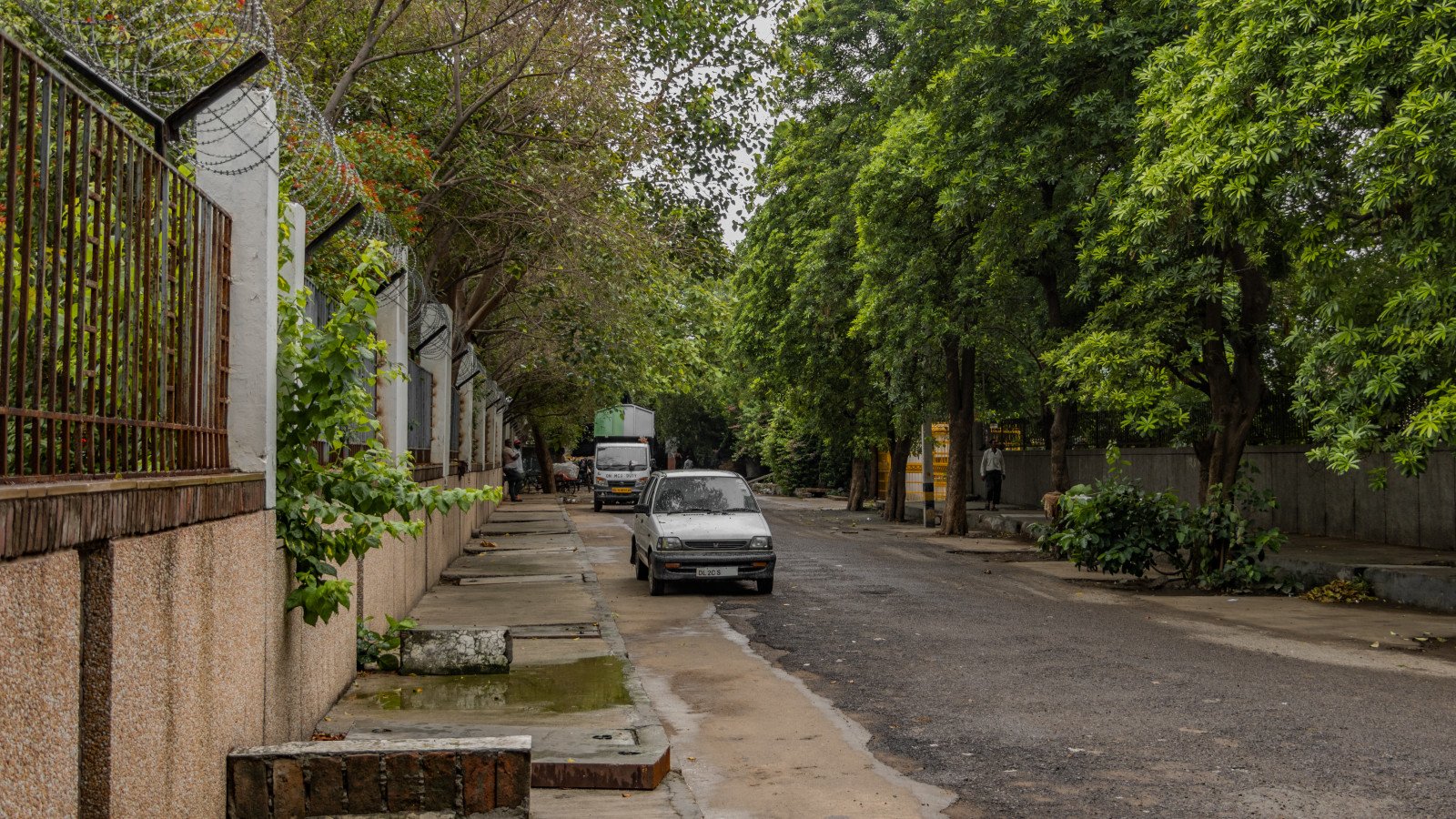
Defence Colony, South Delhi: A 2026 Property Buyer’s Guide
Information reviewed on: 28 September 2026 | Category: South Delhi Luxury Residential Property
Defence Colony is a low-rise, centrally located South Delhi neighbourhood dominated by resale builder floors and redeveloped independent houses, with asking prices averaging roughly ₹40,200 per square foot as of June 2026. It suits end users and long-term holders who value a walk-to-everything location over new construction or large floor plates. This guide sets out what the locality actually offers, what has changed in its market in 2026, and what a serious buyer should verify before making an offer.
What Is Defence Colony? Location and Entity Identification
Defence Colony is a residential neighbourhood in South Delhi, administered by the Municipal Corporation of Delhi (MCD) and functioning as the administrative headquarters of the South East Delhi district. It was developed from 1960 to resettle Armed Forces veterans and their families after Partition, on land adjoining the former Kotla Mubarakpur village.
The colony is bounded by Ring Road to the south, Lala Lajpat Rai Marg to the east, Bhishma Pitamah Marg to the west, and the Delhi Ring Railway tracks to the north. This puts it directly between Lajpat Nagar, Jangpura and Nizamuddin — a location PropIntel’s advisory team consistently sees valued by buyers who want South Delhi’s established-colony character without the distance-from-centre trade-off of localities further south.
Defence Colony Property Market in 2026: A Dated Snapshot
According to Square Yards’ locality price tracker, average asking prices in Defence Colony stood at approximately ₹40,200 per square foot as of June 2026, down roughly 5.5% year-on-year (accessed 28 September 2026). This is portal-listed asking-price data — a demand indicator, not a record of completed transactions — and it should not be read as a forecast of where prices are headed next.
Two points matter for a buyer reading this figure. First, Defence Colony’s market is almost entirely resale; there is no meaningful new-launch supply, so price movement reflects owner expectations and negotiation outcomes on existing stock rather than a builder’s pricing decision. Second, a colony-wide average conceals wide dispersion between an unrenovated ground-floor unit facing Ring Road and a fully renovated top-floor unit with a terrace near the DDA park — a gap of 30-40% is common in practice, per PropIntel’s transaction experience in comparable South Delhi colonies. Buyers should also weigh any asking-price figure against recently registered values rather than other listings alone; see PropIntel’s circle rate versus market price analysis for South Delhi for how to approach that comparison.

Residential Plot — Navjeevan Vihar
Speak directly with Kshitiz Verma, Principal Partner, about this mandate.
- Plot Size600 sq. yds
- FeaturesCorner plot, 3-side open
Freehold, Leasehold and Title: What Defence Colony Buyers Must Check
Ownership history in older South Delhi colonies is not uniform plot to plot, and Defence Colony is no exception — allotment, conversion and mutation records vary by block and by individual plot’s history. Do not assume a property is freehold because the colony is old or because a broker says so.
Before making an offer, a buyer’s lawyer should independently verify: the chain of title from the original allottee; whether the specific plot has a freehold conversion deed or still carries a leasehold designation requiring conversion (PropIntel has covered the mechanics of DDA leasehold-to-freehold conversion separately, including the 2026 Delhi High Court order affecting pending applications); mutation in MCD records; and any pending litigation or partition disputes, which are more common in colonies developed through original family allotments than in single-developer projects.
Builder Floors vs Independent Houses in Defence Colony
Most transactions in Defence Colony today are for builder floor units — typically two to four independent floors carved out of a plot after the original bungalow is demolished and rebuilt, each floor sold or held separately with its own entrance. A small number of intact independent houses (full-plot, single-owner bungalows) still exist and trade at a premium for the land value and redevelopment optionality they carry, but they are increasingly rare inventory.
For a builder floor, a buyer should confirm the building plan was sanctioned by MCD for the number of floors actually built (unsanctioned additional floors are a recurring dispute source in South Delhi builder-floor colonies), and should ask specifically whether a completion or occupancy certificate was obtained for the construction. PropIntel’s broader comparison of builder floors versus apartments in South Delhi covers the trade-offs of this format in more depth.
Connectivity and Location Advantages
Defence Colony’s connectivity is a genuine, verifiable advantage rather than a marketing claim: Lajpat Nagar metro station, an interchange between the Violet and Pink lines, serves most of the colony on foot or by short auto ride, and Sewa Nagar station on the Delhi Ring Railway sits to the northeast. Ring Road gives direct access toward AIIMS, Nizamuddin and South Extension, and the Delhi Golf Club and India Habitat Centre are both within a short drive. This is a location bought primarily for daily-life convenience and centrality, not for proximity to a single upcoming infrastructure project.
Defence Colony vs Other South Delhi Micro-Markets
Comparing Defence Colony to nearby colonies helps a buyer decide whether the locality actually fits their brief, rather than defaulting to whichever name is most familiar.
| Locality | Character | Typical Unit Type | Metro Access | Best Suited To |
|---|---|---|---|---|
| Defence Colony | Dense, low-rise, walk-to-market | Builder floors (2-4 units/plot) | Lajpat Nagar (Violet/Pink, on foot) | End users wanting centrality and metro access |
| Greater Kailash | Larger plots, more markets (M and N Block) | Builder floors and some standalone houses | Greater Kailash (Magenta Line) | Families wanting retail/dining density |
| Vasant Vihar | Diplomatic enclave, larger plot sizes | Independent houses, larger builder floors | Farther from metro; road-dependent | Buyers prioritising space and privacy over walkability |
| Panchsheel Park | Quieter, more residential-only feel | Builder floors | Panchsheel Park not directly served; nearest is Malviya Nagar | Buyers wanting a quieter setting close to GK/South Ex |
This is a qualitative comparison based on publicly available locality data and PropIntel’s on-ground familiarity with these markets; it is not a ranking, since the right choice depends on the buyer’s own priorities. For a wider comparison across South Delhi, see PropIntel’s guide to the best localities in South Delhi for luxury homes.
Who Defence Colony May Suit — and Who It May Not
Defence Colony tends to suit end users who work in or near central and south Delhi and value walkability and metro access over unit size, buyers who are comfortable with an older-building redevelopment or renovation process rather than move-in-ready new construction, and long-term holders who are not seeking rental yield as the primary objective (yields on prime South Delhi builder floors are typically modest relative to purchase price).
It is less likely to suit buyers who specifically want a large single-family plot with garden space (Vasant Vihar or Chhattarpur may fit that brief better), buyers seeking new, RERA-registered construction with a completion certificate already in hand, or investors underwriting the purchase primarily on rental income rather than long-term holding.
Buyer Checklist for Defence Colony Property
- Verify the complete title chain back to the original allotment, including any family settlements, gift deeds or partition documents in the chain.
- Confirm freehold conversion status (or leasehold obligations) for the specific plot, not the colony in general.
- Check the MCD-sanctioned building plan against the actual constructed floors and area.
- Ask for the completion certificate or occupancy certificate, where applicable, and treat its absence as a negotiation and risk factor, not a formality.
- Obtain an encumbrance certificate covering at least the preceding 12-13 years and confirm there is no pending mortgage, attachment or litigation.
- Compare the seller’s asking price against recent registered transaction values where obtainable, not only against other portal listings.
- Verify society/RWA dues, if any, and any pending MCD property tax liabilities that transfer with the property.
For the fuller, NCR-wide version of this process, see PropIntel’s property due diligence checklist for Delhi-NCR buyers.
Key Takeaways
- Defence Colony asking prices averaged approximately ₹40,200 per sq ft in June 2026, down about 5.5% year-on-year (Square Yards, accessed 28 September 2026) — asking-price data, not a transaction record.
- The market is almost entirely resale builder floors; ownership status (freehold vs leasehold) must be verified plot by plot, not assumed for the colony as a whole.
- Lajpat Nagar metro (Violet/Pink interchange) gives Defence Colony genuine, walkable connectivity that several neighbouring colonies lack.
- The locality suits centrality-focused end users more than yield-focused investors or buyers wanting large new-construction homes.
Frequently Asked Questions
Is Defence Colony a good place to buy property in 2026?
It can be, for end users prioritising central location and metro connectivity over unit size or new construction. Asking prices have softened slightly through 2026, which may improve negotiating room, but suitability depends on the buyer’s own priorities and the specific unit’s title and construction status.
What is the price per square foot in Defence Colony?
Portal data (Square Yards) put average asking prices at roughly ₹40,200 per sq ft as of June 2026, with individual units varying 30-40% either side depending on floor, renovation and orientation. This reflects listed asking prices, not confirmed transaction values.
Is property in Defence Colony freehold or leasehold?
It varies by plot. Defence Colony was allotted from 1960 and individual plots carry different conversion and mutation histories, so a buyer must verify freehold conversion status for the specific property through title search and MCD/sub-registrar records rather than assuming a colony-wide status.
How does Defence Colony compare to Greater Kailash or Vasant Vihar?
Defence Colony offers denser, more walkable, metro-connected living; Greater Kailash offers larger markets and slightly bigger plots; Vasant Vihar offers more space and privacy but less metro accessibility. The comparison table above sets these out side by side.
What should buyers check before purchasing a builder floor in Defence Colony?
At minimum: full title chain, freehold/leasehold status of the specific plot, MCD-sanctioned building plan versus actual construction, completion/occupancy certificate, an encumbrance certificate, and any outstanding dues that transfer with the property. See the buyer checklist above for the full list.
PropIntel Perspective
The available data points to a resale market that has softened modestly in 2026 rather than one repricing sharply in either direction. That combination — centrality, metro access and a slight easing in asking prices — may suit an end user planning to hold for the long term and willing to manage an older building’s title and construction history. It is a weaker fit for a buyer underwriting the purchase on rental yield, or one unwilling to commission an independent title and structural check on a plot with a multi-decade ownership history. Before proceeding, verify the specific plot’s freehold status, sanctioned construction, and encumbrance position independently of what any listing or broker represents, and take project-specific legal advice before signing.
Sources and Methodology
- Wikipedia, “Defence Colony” — locality history, boundaries and administrative status (accessed 28 September 2026).
- Square Yards, Defence Colony, Delhi price trends — average asking price per sq ft, June 2026 (accessed 28 September 2026).
- PropIntel analysis and transaction experience in comparable South Delhi builder-floor colonies.
This article is for general information only and does not constitute legal, financial or investment advice. Property values, ownership status and regulatory requirements can change; readers should obtain independent, property-specific legal and financial advice before making a purchase decision.