
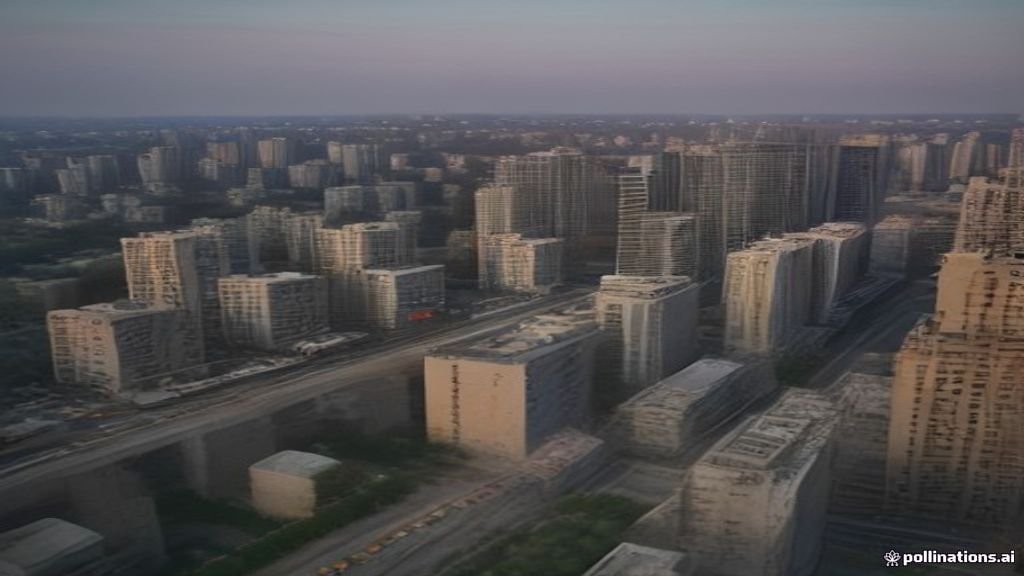
Gurugram’s real estate market added a significant volume of new, regulator-approved residential supply in the first half of 2026 — but the headline numbers describe approvals, not sales, and premiumisation has been sharp enough to change who this market now serves. The Haryana Real Estate Regulatory Authority (HRERA) cleared 51 projects worth an estimated ₹38,050 crore between January and June 2026, of which over 92% of new residential units fell into the luxury bracket. Separately, industry data reported in September 2026 puts capital values on Gurugram’s established luxury corridors up 117% since 2019. Both figures are real and dated — but neither tells a buyer, on its own, whether now is the right time to act.
This article works through what the H1 2026 HRERA data actually says, where the new supply is concentrated, what the premiumisation trend means for different types of buyers, and the questions PropIntel would ask before treating any of these figures as a reason to move quickly.
Key Takeaways
- HRERA approved 51 projects worth roughly ₹38,050 crore in H1 2026, with 11 of those projects alone accounting for around ₹25,000 crore — supply is concentrated among a small number of large developers.
- Over 92% of new residential units approved were in the luxury category (15,403 of 16,727 units), a structural shift away from the mid-market launches that once defined Gurugram.
- ANAROCK data reported in September 2026 shows capital values on established luxury corridors up 117% since 2019 (₹6,150 to ₹13,350 per sq. ft.), with rental yields improving from 3.5% to 4.3% over the same period.
- Approval and launch volumes are not sales or possession data — due diligence on any specific project remains essential regardless of how active the broader market appears.
- The corridors seeing the most new supply — Dwarka Expressway, Southern Peripheral Road/New Gurugram, and the Sector 103/106/113 belt — are at different stages of physical completion, which materially changes the risk profile of buying there today.
What the H1 2026 HRERA Data Actually Shows
HRERA’s approval count is a measure of regulatory clearance to launch and sell, not a measure of demand or completed transactions. A project entering HRERA’s records in H1 2026 has passed statutory disclosure requirements — but approval says nothing about pre-launch pricing discipline, construction pace, or eventual absorption.
According to figures reported on 11 July 2026 (BusinessToday) and corroborated by other property-trade coverage the same week, HRERA cleared 51 projects in Gurugram in the first six months of 2026, together valued at approximately ₹38,050 crore and comprising 16,727 units. Of that unit count, over 92% — 15,403 units — were classified as luxury residential. Eleven of the 51 projects, concentrated among established developers, accounted for roughly ₹25,000 crore of the total investment value, meaning the bulk of capital sits with a small number of large-scale launches rather than being spread evenly across the market.
Named developers and locations reported active in this approval cycle include DLF, Godrej Properties, Emaar, M3M and Oberoi Realty, with new supply concentrated in Sector 58, Golf Course Extension Road, the Dwarka Expressway corridor (Sectors 76–77, 102 and 112), Southern Peripheral Road/New Gurugram (Sectors 71 and 79), Golf Course Road, and Sectors 103, 106 and 113. This is reported approval-cycle data, not a PropIntel-verified project list — buyers should confirm any individual project’s current HRERA registration number directly on haryanarera.gov.in before proceeding.

4BHK Builder Floor — Gulmohar Park
Speak directly with Kshitiz Verma, Principal Partner, about this mandate.
- Plot Size300 sq. yds
- Configuration4BHK
- FloorFirst Floor
- FacingNorth-West
Why Luxury Now Dominates New Supply
A direct answer: developers are launching fewer mid-market units in Gurugram because land and construction costs on the remaining developable parcels increasingly only clear at luxury price points, and demonstrated buyer appetite at the top of the market has reinforced that shift.
Separately, ANAROCK data reported by India TV News on 28 September 2026 shows capital values on Gurugram’s established luxury micro-markets rising 117% between 2019 and Q2 2026 — from roughly ₹6,150 to ₹13,350 per square foot — with rental yields improving from 3.5% to 4.3% over the same window. The same report notes that 27% of NCR launches in Q2 2026 were priced above ₹2.5 crore, split between a ₹2.5–4 crore bracket (11%) and an ultra-luxury bracket above ₹4 crore (16%).
Two things follow from this. First, the “average Gurugram price” is increasingly a less useful number, because the market is bifurcating — established corridors compounding at luxury rates, while newer, still-under-construction corridors remain priced for a different buyer entirely. Second, buyers who assume Gurugram is a single, uniformly-priced market risk comparing an under-construction Dwarka Expressway launch against a completed Golf Course Road resale on the wrong basis.
Corridor-by-Corridor: What’s Actually Different
| Corridor | Current stage (as of Sept 2026) | Typical buyer profile | Primary consideration |
|---|---|---|---|
| Golf Course Road | Largely established, low new supply | End-users, wealth preservation, resale buyers | Premium is for completion certainty and social infrastructure, not growth |
| Golf Course Extension Road | Maturing, selective new launches | Upgraders, HNI end-users | Compare specific project completion status, not corridor averages |
| Dwarka Expressway (Sectors 76–77, 102, 112) | Active construction, high new-launch volume | Investors and end-users with medium-term horizon | Possession-date risk is the dominant variable — verify RERA-disclosed timelines project by project |
| Southern Peripheral Road / New Gurugram (Sectors 71, 79) | Earlier-stage development | Investors comfortable with longer infrastructure-dependent timelines | Connectivity and social infrastructure still developing; price entry is typically lower |
This table is a structural comparison, not a recommendation — suitability depends on the buyer’s holding period, liquidity needs and risk tolerance, none of which a corridor-level table can capture.
Advantages, Limitations and Risks
Advantages of the current cycle: regulatory disclosure standards under HRERA are more consistent than in Gurugram’s pre-RERA years; the concentration of new supply among large, established developers reduces (but does not eliminate) counterparty risk; and documented capital-growth data on established corridors gives buyers a verifiable historical reference point rather than a marketing claim.
Limitations and risks: HRERA approval and launch-price data does not capture actual transaction prices, which can differ materially from asking prices, particularly in a market with this much concurrent new supply. Concentration of ₹25,000 crore of investment among just 11 projects means corridor-level averages can be skewed by a small number of large launches. Newer corridors such as Dwarka Expressway and New Gurugram remain dependent on infrastructure completion timelines that have historically slipped in Gurugram; buyers should treat any stated possession date as provisional until independently confirmed. Finally, past capital growth on established corridors — the 117% figure cited above — describes what has already happened and is not a forecast; PropIntel does not treat historical appreciation as a predictor of future returns.
A Buyer’s Checklist Before Acting on Market-Level Data
- Confirm the specific project’s HRERA registration number and disclosed possession date directly on haryanarera.gov.in — do not rely on a developer brochure or portal listing.
- Ask for the project’s actual construction-progress documentation (not marketing renders) against its disclosed timeline.
- Distinguish clearly between the developer’s asking price, any portal-listed price, and verified recent transaction values in the same micro-market — these are frequently different numbers.
- Establish your own holding-period and liquidity requirement before comparing an established corridor against an under-construction one — they are not substitutable on a like-for-like basis.
- For any resale purchase, independently verify title, encumbrance status and outstanding dues rather than relying solely on the seller’s documentation.
- Where a broker or advisor cites market-wide growth figures, ask for the specific source, date and geography — a corridor-level or citywide average does not necessarily apply to a specific project or floor.
FAQs
Q1. What does HRERA approval actually guarantee for a buyer?
HRERA approval confirms a project has met statutory disclosure requirements — project details, promoter information, and a stated timeline — before units can be sold. It does not guarantee construction quality, on-time delivery, or that the developer will not seek timeline extensions.
Q2. Are the reported ₹38,050 crore in H1 2026 approvals actual sales?
No. This figure represents the estimated investment value of newly HRERA-approved projects, not completed or booked sales. Actual transaction activity and absorption rates are separate, unpublished data points in this dataset.
Q3. Why is the luxury share of new supply so high?
Reported industry data attributes this to rising development costs on Gurugram’s remaining land parcels and stronger demonstrated demand at higher price points, which has made mid-market launches comparatively less viable for developers on new land.
Q4. Should I buy on an established corridor or a newer one like Dwarka Expressway?
This depends on your holding period and risk tolerance. Established corridors offer more completion certainty at a higher entry price; newer corridors carry construction and infrastructure-timeline risk in exchange for a typically lower entry point. Neither is inherently the better choice — it is a suitability question, not a market-timing one.
Q5. Where can I verify a project’s RERA status myself?
Directly on the Haryana Real Estate Regulatory Authority’s website, haryanarera.gov.in, which lists registered projects, promoters and disclosed timelines.
PropIntel Perspective
The H1 2026 HRERA data confirms genuine regulatory activity and documented historical capital growth on Gurugram’s established corridors — but it describes approvals and past performance, not future certainty. This data set is most useful to buyers with a defined holding period who are prepared to verify individual project status rather than act on corridor-level averages. It is less useful to buyers seeking a quick, low-risk entry point, given how concentrated new supply is in the luxury bracket and how dependent newer corridors remain on infrastructure delivery. Before proceeding on any specific project, confirm current HRERA registration, construction progress against disclosed timelines, and recent verified transaction values — not asking prices — in that micro-market. Where possession timelines or title status cannot be independently confirmed, waiting for greater clarity is a legitimate outcome, not a missed opportunity.
This article reflects publicly available information as of 29 September 2026 and PropIntel’s independent analysis of that information. It is not investment, legal or tax advice. Readers should obtain project-specific legal and financial advice, and independently verify RERA status, before entering into any transaction.