
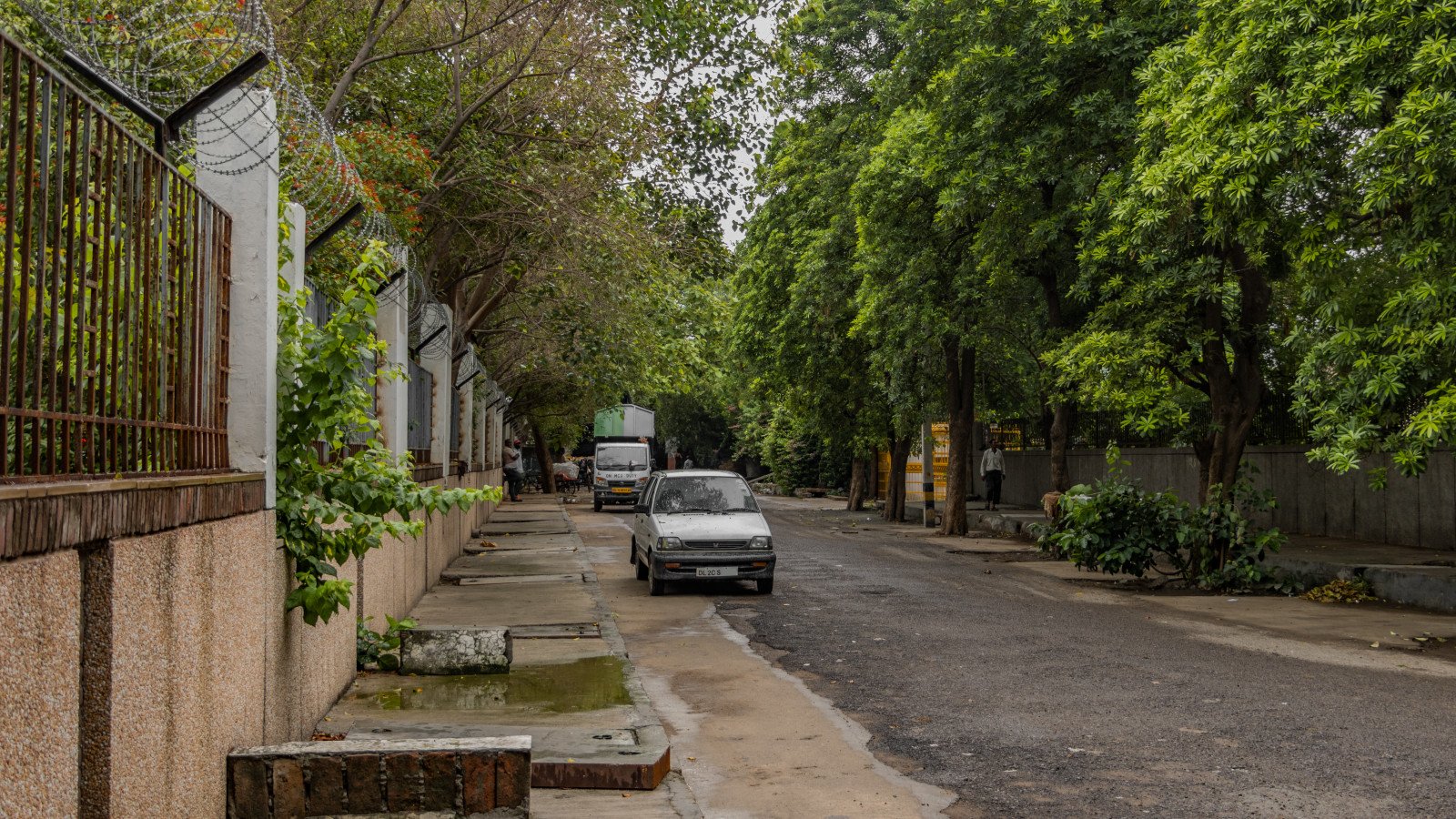
Buying Property in Vasant Vihar, South Delhi: A 2026 Guide
By the PropIntel Research & Advisory Desk — PropIntel’s in-house team tracking registry transactions, regulatory filings and locality trends across NCR and Goa. This article reflects desk research from the sources cited below; PropIntel has not conducted a first-hand site inspection. Published 10 October 2026. Last reviewed: 10 October 2026. Readers should obtain project-specific legal and financial advice before transacting.
PropIntel is a boutique real estate advisory covering acquisition, due diligence and discreet transactions across Delhi-NCR and Goa. Vasant Vihar is one of South Delhi’s most expensive residential colonies, known for its proximity to the Chanakyapuri diplomatic area, its concentration of foreign missions and international schools, and a resale market dominated by large, old bungalow plots rather than built apartments. If you are evaluating Vasant Vihar specifically — not South Delhi generally — the decision hinges less on “is it a good address” (it is) and more on three practical questions: what is the land’s legal origin, what has actually sold recently versus what is merely listed, and whether your holding horizon matches a market where large, clear-title plots are scarce and liquidity is thin.
Key Takeaways
- Vasant Vihar was developed from the 1960s by the Central Public Works Department (CPWD) for the Central Government Servants Cooperative House Building Society, on a 99-year lease basis — buyers should confirm each specific plot’s current lease status and any conversion history before purchase.
- Two large, registry-reported plot transactions in 2025 — ₹113 crore for a 1,280 sq. yd. plot and ₹72 crore for an 800 sq. yd. plot with 6,000+ sq. ft. built-up area — give a dated, sourced reference point for ultra-high-ticket pricing in the colony; neither should be read as “the” market rate, since large clear-title plots trade infrequently and each sale has its own specifics.
- Delhi’s government has begun a stated review of circle rates across all categories (A–H) for the first time in several years, as reported in February 2026 trade press; no revised rate or implementation date had been announced as of this writing, so any circle-rate figure quoted elsewhere should be verified on the DORIS portal rather than taken from third-party blogs.
- Vasant Vihar sits on the Delhi Metro Magenta Line, with a station of the same name connecting toward Janakpuri West and Botanical Garden (Noida) — a genuine connectivity advantage over several comparable South Delhi colonies that remain metro-distant.
- Redevelopment of ageing bungalows into low-rise apartments or custom-built homes is an active, visible trend in the colony, which changes the due-diligence questions buyers should ask compared to a straightforward resale.
Where Vasant Vihar Sits Among South Delhi’s Premium Colonies
Vasant Vihar was carved out of the Basant Gaon village lands acquired by the government in the 1960s and developed under a CPWD master plan for the Central Government Servants Cooperative House Building Society, on a 99-year lease (Vasant Vihar, Wikipedia, accessed October 2026). It is organised into six blocks (A–F), each with its own local market, and today it is counted among the colonies hosting over 50 foreign diplomatic missions in its immediate vicinity, alongside schools including the American Embassy School, The Shri Ram School (Junior Wing), Modern School and DPS (Junior Branch). This combination — diplomatic-adjacent location, established social infrastructure, and a 99-year lease origin rather than DDA freehold allotment from the outset — is what distinguishes Vasant Vihar from colonies like Greater Kailash or Defence Colony, covered in PropIntel’s comparison of the best South Delhi localities for luxury homes, and is the first thing a prospective buyer should understand before comparing price. Buyers weighing a built floor instead of a plot should also see PropIntel’s guide to builder floor vs apartment in South Delhi.

Residential Plot — Navjeevan Vihar
Speak directly with Kshitiz Verma, Principal Partner, about this mandate.
- Plot Size600 sq. yds
- FeaturesCorner plot, 3-side open
What Has Actually Sold: Registry Data vs Listing Prices
Two large plot transactions reported in the trade press in 2025 give useful, sourced reference points — though both predate this article and should be treated as historical data points, not current asking prices:
- A 1,280 sq. yd. plot near Vasant Lok market changed hands for ₹113 crore, registered on 25 June 2025, roughly six months after the same plot had sold for ₹95 crore — implying a price of approximately ₹9 lakh per sq. yd. on the later sale, against a colony average cited at ₹9–11 lakh per sq. yd. by a local broker quoted in the report (The Realty Today, accessed October 2026).
- A separate 800 sq. yd. plot with over 6,000 sq. ft. of built-up area sold for ₹72 crore in April 2025, with stamp duty of ₹1.8 crore paid on the transaction, per the same report.
These are registered transaction values reported via property-document access (Zapkey.com) and a named local broker’s commentary, which PropIntel treats as more reliable than listing-portal asking prices, but they are not an official government price index and should not be extrapolated into a per-sq-yd “rate card” for every plot in the colony — Vasant Vihar has over 1,500 residential plots, but genuinely large, clear-title plots come to market infrequently, which is itself a reason individual sales vary widely.
Separately, Delhi’s government confirmed in reports current as of February 2026 that it has begun a structured review of circle rates — the government-notified minimum values used for stamp duty — across all eight categories (A through H) for the first time in several years, inviting suggestions from resident welfare associations and property owners before finalising any change (PropNewsTime, updated 25 Feb 2026). Vasant Vihar sits in Delhi’s Category A, the highest circle-rate bracket, but no revised rate had been notified at the time of writing — buyers should check the current, official rate directly on the DORIS portal before registration rather than rely on older published figures, some of which conflict even within the same secondary source.
Connectivity and Practical Living Considerations
Vasant Vihar is served by the Magenta Line of the Delhi Metro, at a station of the same name, with trains running toward Janakpuri West in one direction and Botanical Garden (Noida) in the other. Main internal roads — Vasant Marg, Munirka Marg, Poorvi Marg and Paschimi Marg — form a rough triangle around the colony, and it sits within easy reach of Chanakyapuri, Vasant Kunj, Dhaula Kuan and the IGI Airport corridor. For end-users, the practical trade-off is less about raw connectivity (which is strong) and more about colony character: Vasant Vihar is predominantly low-rise, bungalow-plot residential, with limited new high-rise apartment supply compared to, say, parts of Greater Kailash or South Delhi’s newer builder-floor clusters.
Advantages, Limitations and Risks
Advantages: Diplomatic-adjacent location with strong rental demand from foreign missions and expatriate executives; genuine metro connectivity via the Magenta Line; established schools and retail; Category A circle-rate status reflecting its position among Delhi’s most valued colonies.
Limitations: Large, clear-title plots are scarce, which thins the market and can extend the time needed to find a comparable sale for valuation purposes; most available stock is ageing bungalow construction rather than modern built floors, so many purchases involve either a full redevelopment decision or significant renovation cost.
Risks: Because the colony’s land origin traces to a 99-year CPWD lease, buyers must independently confirm each specific plot’s current lease/freehold status, any conversion already completed, and whether redevelopment plans (increasingly common in the colony) comply with applicable floor-area and height norms before assuming a given configuration is achievable. PropIntel’s broader guide to how DDA leasehold-to-freehold conversion works following the 2026 Delhi HC order is a useful companion reference, though buyers should confirm whether Vasant Vihar’s specific lease administration differs from the DDA colonies covered there.
Who Vasant Vihar May Suit — and Who Should Look Elsewhere
Vasant Vihar tends to suit buyers prioritising diplomatic-adjacent prestige, strong long-term rental demand from the expatriate and diplomatic community, and a multi-year or indefinite holding horizon who are comfortable either renovating an older bungalow or undertaking redevelopment. It is less suited to buyers who want a move-in-ready modern apartment at this price point (better served by builder-floor-dense colonies covered elsewhere in this cluster), or to anyone who needs fast resale liquidity — thin plot supply means finding a buyer for a specific large plot can take considerably longer than in a colony with more standardised built-floor stock.
Buyer Checklist
- Confirm the specific plot’s current lease status (99-year CPWD lease vs any completed freehold conversion)
- Verify the current, official Category A circle rate on the DORIS portal — not from a third-party blog
- Request registry/encumbrance documents, not just the seller’s title summary
- If buying an older bungalow, independently assess redevelopment feasibility (FAR, height limits) before pricing in any uplift
- Compare the asking price against recently registered transactions in the same block, not colony-wide averages
- Factor in realistic resale timelines given the scarcity of large, clear-title plots
FAQs
Is Vasant Vihar a good place to buy property in Delhi?
Vasant Vihar is one of Delhi’s most expensive and diplomatically significant colonies, with strong long-term rental demand and genuine metro connectivity. Whether it is “good” for a specific buyer depends on holding horizon and liquidity needs — PropIntel does not make blanket investment recommendations.
What is the price of a plot in Vasant Vihar?
Reported registered transactions in 2025 ranged from roughly ₹72 crore for an 800 sq. yd. plot with existing construction to ₹113 crore for a 1,280 sq. yd. plot, implying a broker-estimated colony average in the ₹9–11 lakh per sq. yd. range at that time. These are historical, sourced data points, not a current price list — always verify against the latest registered comparables.
Is Vasant Vihar freehold or leasehold?
Vasant Vihar was originally developed on a 99-year lease basis under a CPWD cooperative-society allotment. Individual plots may have different current statuses depending on whether conversion has occurred; this must be verified plot-by-plot and is not uniform across the colony.
How is Vasant Vihar connected by metro?
Vasant Vihar has its own station on the Delhi Metro’s Magenta Line, with services running toward Janakpuri West and Botanical Garden (Noida).
How does Vasant Vihar compare with Greater Kailash or Defence Colony?
Vasant Vihar is more diplomatic-enclave-adjacent and bungalow-plot dominated, with thinner but higher-ticket transaction activity; Greater Kailash and Defence Colony have denser builder-floor stock and comparatively more liquid resale markets. See PropIntel’s South Delhi locality comparison guide for a fuller side-by-side.
PropIntel Perspective
Vasant Vihar’s value proposition rests on scarcity and location rather than modern built stock — most of what is genuinely for sale is large, older plots rather than ready apartments, and the 99-year lease origin means legal verification has to be done at the individual-plot level rather than assumed for the colony as a whole. The two 2025 registered transactions cited here suggest sustained appetite at the very top of the market, but they are two data points in a market where large, clear-title plots trade rarely — not a basis for projecting future values. This colony may suit buyers with a long, flexible holding horizon who value the diplomatic-adjacent address and are prepared to either renovate or redevelop; it is less suited to anyone who needs a fast, liquid exit or a turnkey modern home at this price point. Before proceeding, buyers should independently verify the specific plot’s lease and redevelopment status, obtain the latest registered comparables, and take project-specific legal and financial advice — this article is general information, not a transaction recommendation.
Sources and Methodology
Facts in this article were drawn from Vasant Vihar’s Wikipedia entry (accessed October 2026, itself citing historical development records), a Realty Today report on two 2025 registered plot transactions (accessed October 2026, citing Zapkey.com property-document access and broker commentary from SouthDelhiPrime.com), and a PropNewsTime report on Delhi’s proposed circle-rate recalibration (updated 25 Feb 2026). Where a secondary source gave inconsistent figures (noted explicitly for circle-rate data), this article has not resolved the inconsistency by invented numbers — buyers are directed to the DORIS portal for current official data. No price, lease status or regulatory change not found in these sources has been assumed. For PropIntel’s wider coverage of this cluster, see South Delhi Luxury Residential Property.