
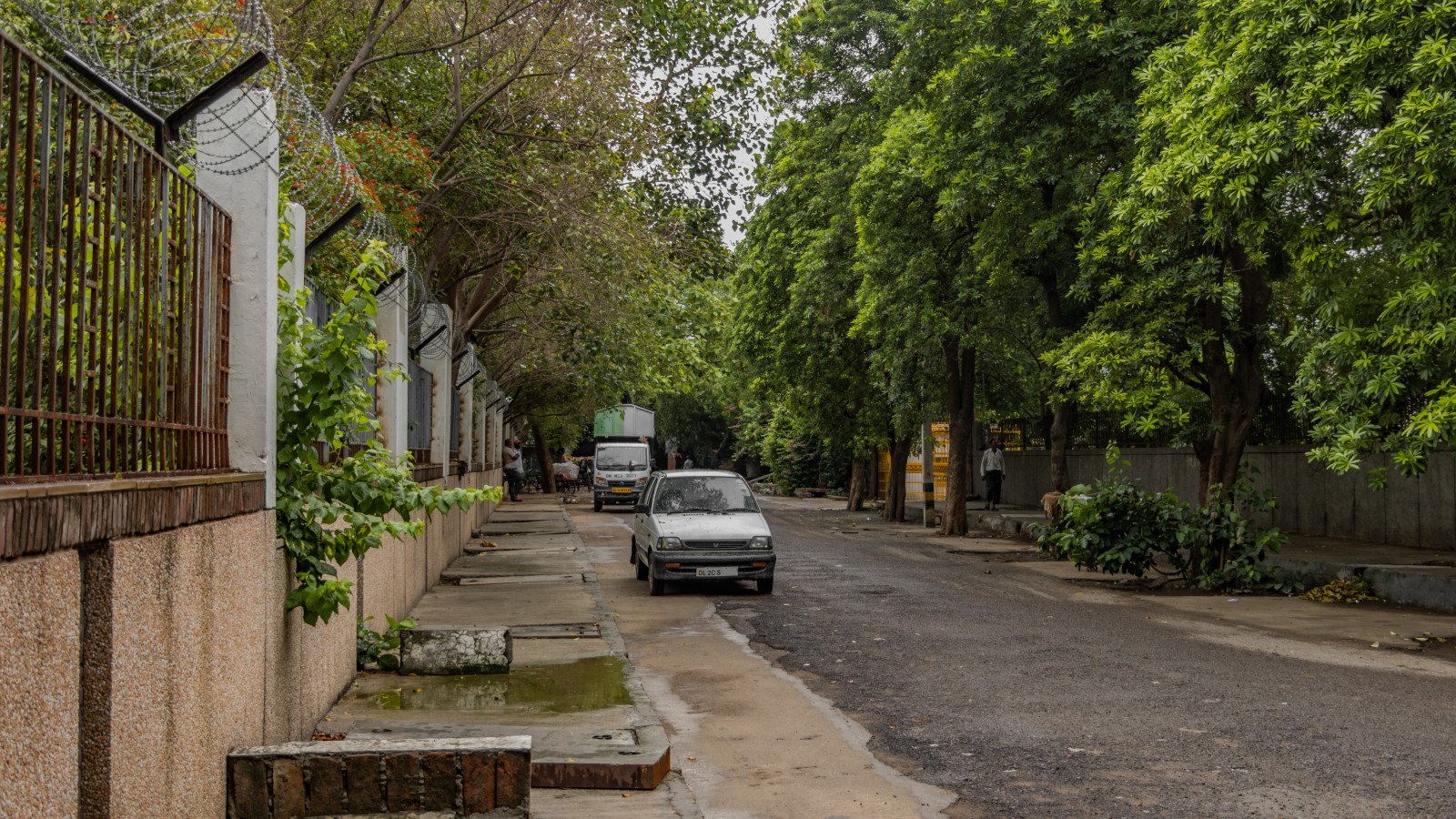
Buying Property in Greater Kailash, Delhi: A 2026 Buyer’s Guide
Information reviewed on: 11 October 2026. Greater Kailash is a planned South Delhi colony, split administratively into Greater Kailash-I (GK-I) and Greater Kailash-II (GK-II), developed mainly through the 1960s and 1970s and dominated by independent houses and builder floors rather than large gated apartment complexes. It sits in the Delhi Development Authority’s (DDA) Category B for circle-rate purposes, is served by the Delhi Metro Violet Line at Kailash Colony station, and suits buyers who want an established, centrally located South Delhi address over a newer planned township. It is less suited to buyers wanting large modern amenities, structured parking or a homogeneous gated community.
Greater Kailash at a Glance
Greater Kailash (GK) is a residential colony in South Delhi, under the jurisdiction of the Municipal Corporation of Delhi (MCD) for civic matters and the Delhi Development Authority (DDA) for circle-rate categorisation. It borders Defence Colony, East of Kailash, Kalkaji and Chittaranjan Park. The colony is officially divided into GK-I and GK-II, each with its own commercial spine — the M-Block and N-Block markets in GK-I, and the GK-II (E-Block) market, known locally for dining and retail. GK-I falls under Delhi’s Central Zone (ward “Greater Kailash-I”), while GK-II is administered under the South Zone (ward “Chirag Delhi”) — a distinction that matters for civic applications and property-tax jurisdiction even though both areas are commonly referred to together as “GK.”
GK-I vs GK-II: What Actually Differs
| Aspect | GK-I | GK-II |
|---|---|---|
| MCD zone / ward | Central Zone / Greater Kailash-I | South Zone / Chirag Delhi |
| Main market | M-Block and N-Block Markets | GK-II (E-Block) Market |
| Character | Older, denser block layout; closer to Nehru Place and Kailash Colony metro | Slightly newer sections; closer to Chittaranjan Park and the Outer Ring Road |
| Housing stock | Mostly independent houses and builder floors across lettered blocks (C, M, R, S and others) | Mix of independent houses, builder floors and some apartment-style development |
Both GK-I and GK-II carry the same DDA circle-rate category, so the zone/ward distinction does not by itself change registration cost — but it does determine which MCD ward office and property-tax circle a buyer deals with, which is a genuine point of friction buyers sometimes discover only after purchase. For how GK compares with other established South Delhi colonies, see PropIntel’s Best Localities in South Delhi for Luxury Homes and the neighbouring-colony profile in our Defence Colony buyer’s guide.

4BHK Builder Floor — Gulmohar Park
Speak directly with Kshitiz Verma, Principal Partner, about this mandate.
- Plot Size300 sq. yds
- Configuration4BHK
- FloorFirst Floor
- FacingNorth-West
Connectivity: Metro, Roads and Travel Times
Kailash Colony station, on the Delhi Metro Violet Line, sits adjacent to GK-I, between Moolchand and Nehru Place stations. This gives direct metro access toward Central Delhi (via Moolchand, Lajpat Nagar) and toward Nehru Place, Kalkaji and onward to Faridabad/Ballabhgarh. By road, GK connects to Outer Ring Road, Mathura Road and the Delhi Ring Road, with Nehru Place’s commercial district within a short drive. Indira Gandhi International Airport is roughly 15 km away via South Delhi’s arterial roads.
Circle Rate and Registration Costs
Under DDA’s current circle-rate structure, all of Greater Kailash (GK-I through GK-IV, as DDA categorises the broader locality) falls in Category B, with a residential circle rate of approximately ₹17,400 per square metre and a commercial rate of approximately ₹19,920 per square metre, per Housing.com’s reporting of DDA rates (published December 2023). Two things buyers must know before relying on this figure. First, Delhi’s residential circle rates have not been revised since 2014; Chief Minister Rekha Gupta announced in June 2025 that a divisional-commissioner-led committee had been directed to study a revision, with officials citing undervaluation of up to 35% against market prices — but as of this review, no revised rate structure has been formally notified. Second, circle rates are a stamp-duty floor, not a market valuation; always confirm the live, currently notified rate on Delhi’s DORIS portal at the time of registration, since a rate change could be notified with limited notice. PropIntel’s Circle Rate vs Market Price in South Delhi guide explains this gap in more detail.
Property Types and a Price Reality Check
Greater Kailash’s housing stock is overwhelmingly independent houses and builder floors, with apartment-style complexes comparatively rare — a different profile from newer South Delhi micro-markets or Gurugram’s group-housing projects. Buyers researching asking prices online will find a wide and inconsistent spread across property portals, with some listing pages showing figures that conflict with each other on the same site, and others carrying undated or multi-year-old data presented as current. PropIntel’s view: do not anchor a purchase decision to a single portal’s headline price-per-square-foot figure for Greater Kailash. Instead, cross-check at least two independent sources — recent registered sale deeds (available for a fee at the relevant sub-registrar office), a registered valuer’s opinion, and genuinely dated recent listings for comparable block, floor and plot size — before forming a view of fair value. This inconsistency is itself useful information: it signals a market with fewer recent, comparable transactions than high-churn micro-markets, which affects how confidently any asking price can be benchmarked. For the wider trade-off between these two formats, see PropIntel’s Builder Floor vs Apartment in South Delhi comparison.
Who Greater Kailash Suits — and Who It May Not
- Suits: End-users who want a central, established South Delhi address with mature social infrastructure (markets, schools, hospitals nearby), metro access, and are comfortable with independent-house or builder-floor living rather than a managed apartment complex.
- Suits: Long-horizon buyers and families who value locality reputation and low-density character over new-build amenities.
- May not suit: Buyers who specifically want structured covered parking, lift access, 24×7 security staffing and clubhouse-style amenities typical of newer gated apartment developments — these exist in GK but are the exception rather than the norm.
- May not suit: Buyers requiring a high-churn resale market with abundant recent comparables for quick valuation; GK’s limited recent transaction visibility (as noted above) means pricing diligence takes longer.
Due Diligence Checklist for Buyers in Greater Kailash
- Confirm the property’s title chain and obtain an encumbrance certificate covering at least the past 12-13 years from the sub-registrar.
- For builder floors, verify the sanctioned building plan with MCD and check whether the floor was constructed and sold in compliance with MCD’s building bye-laws, including floor-wise registration where applicable.
- Confirm which MCD zone and ward the specific property falls under (Central Zone for GK-I, South Zone/Chirag Delhi for GK-II) to understand which property-tax circle and civic office will apply going forward.
- Verify the currently notified DDA/Delhi government circle rate on the DORIS portal at the time of registration, not from an older news report.
- For independent houses on larger plots, check for any pending land-use, conversion or unauthorised-construction notices with MCD before price negotiation.
- If buying into a multi-floor building, confirm whether a residents’ or owners’ association exists for shared areas such as the terrace, stairwell and parking, and review any existing arrangement in writing.
- Obtain at least two independent price references (registered sale-deed data and a valuer’s opinion) given the inconsistency in portal-listed asking prices noted above.
When Waiting or Looking Elsewhere May Make Sense
If a buyer’s primary requirement is modern amenities, covered parking for multiple vehicles, or a managed, homogeneous gated environment, a newer South Delhi micro-market or a Gurugram group-housing project may be a better fit than Greater Kailash, where such stock is limited. Equally, a buyer anticipating Delhi’s pending circle-rate revision materially affecting stamp duty may prefer to time a purchase around a formal notification rather than before one, since the direction and magnitude of any revision has not yet been confirmed.
Key Takeaways
- Greater Kailash is split into GK-I (Central Zone, M/N-Block markets) and GK-II (South Zone, Chirag Delhi ward, E-Block market) — a civic distinction, not just a naming convention.
- Kailash Colony metro station on the Violet Line gives GK-I direct metro access; GK’s broader connectivity relies on Outer Ring Road and Mathura Road.
- DDA’s Category B circle rate (~₹17,400/sq m residential) dates to rates last revised in 2014; a revision committee was formed in June 2025 but no new rates were notified as of this review.
- Portal-listed asking prices for Greater Kailash are inconsistent and sometimes outdated — verify with registered sale-deed data or a valuer rather than a single listing page.
- The locality’s housing stock is dominated by independent houses and builder floors, not large apartment complexes, which shapes who it suits.
Frequently Asked Questions
Is Greater Kailash a good place to buy property in Delhi?
It can be, for buyers who value an established, centrally located South Delhi address with metro access and mature infrastructure, and who are comfortable with independent-house or builder-floor stock rather than large gated apartment complexes. It depends on priorities, not a single “yes or no” answer.
What is the actual difference between GK-1 and GK-2?
Beyond common usage as one locality, GK-I falls under Delhi’s Central Zone (ward Greater Kailash-I) while GK-II falls under the South Zone (ward Chirag Delhi). Each has its own main market (M/N-Block in GK-I; the E-Block market in GK-II), which affects which MCD office handles civic matters and property tax for a specific address.
What is the current circle rate in Greater Kailash?
Reported DDA rates place Greater Kailash in Category B, at roughly ₹17,400 per square metre for residential property, based on reporting from December 2023. Delhi’s circle rates were last revised in 2014, and a revision is under study (announced June 2025) but had not been formally notified as of this review. Always confirm the live rate on the DORIS portal before registration.
Is Greater Kailash well connected by Delhi Metro?
Yes, for GK-I in particular. Kailash Colony station on the Violet Line sits adjacent to GK-I, between Moolchand and Nehru Place stations, giving direct access toward Central Delhi and toward Kalkaji and Faridabad.
Should I buy a builder floor or wait for an apartment project in Greater Kailash?
Greater Kailash has very limited large-apartment stock, so buyers specifically wanting apartment-style living with structured amenities are more likely to find that inventory in other South Delhi micro-markets or in Gurugram/Noida group-housing projects, rather than by waiting for new apartment supply within GK itself.
PropIntel Perspective
Greater Kailash’s appeal is its combination of an established South Delhi address, metro access and low-density character — qualities that do not depend on future infrastructure or new supply, unlike some of the newer corridors PropIntel covers. That stability is also its limitation: amenity-rich, apartment-style stock is scarce, and the resale market generates fewer recent, comparable transactions than higher-churn micro-markets, which makes price benchmarking harder and more dependent on a buyer’s own diligence. This may suit end-users prioritising location and locality character over modern building amenities. It is less suited to buyers who want a managed gated complex or a fast, data-rich resale comparison. Before proceeding, buyers should confirm the current DDA circle rate directly on DORIS, verify which MCD zone governs the specific property, and obtain an independent valuation rather than relying on a single portal’s asking-price figure. Readers should seek project- and property-specific legal and financial advice before completing any transaction.
If you are evaluating a specific house or builder floor in Greater Kailash and want its title chain, MCD compliance and price benchmarking independently reviewed, PropIntel’s advisory team can support that due-diligence process on request.
Sources and Methodology
- Housing.com, “Circle rates in Greater Kailash, Delhi,” published 1 December 2023, citing DDA circle-rate categorisation. Accessed 11 October 2026.
- TheAarchNews, report on Delhi Chief Minister Rekha Gupta’s June 2025 announcement of a circle-rate revision committee. Accessed 11 October 2026.
- Wikipedia, “Kailash Colony metro station,” for Violet Line confirmation and adjacent stations. Accessed 11 October 2026.
- Delhi Online Registration Information System (DORIS) — recommended as the authoritative live source for current circle rates at the time of any transaction.
Methodology note: Several property-portal pages reviewed for this guide contained internally inconsistent or undated price and metro-line information for Greater Kailash. PropIntel has excluded those specific figures rather than repeat unverified data, and has flagged the inconsistency itself as a due-diligence point for buyers.
For PropIntel’s full South Delhi coverage, see the South Delhi Luxury Residential Property section, or review current PropIntel listings for comparable South Delhi opportunities.
Author: PropIntel Research Desk, boutique real estate advisory covering South Delhi, Gurugram, Noida and Goa. Original publication date: 11 October 2026. Last reviewed: 11 October 2026. Recommended review date: within 90 days, or sooner if Delhi notifies a revised circle-rate structure. This article is for general information only and does not constitute legal, tax or investment advice. Readers should verify current circle rates on DORIS and obtain independent professional advice before transacting.