
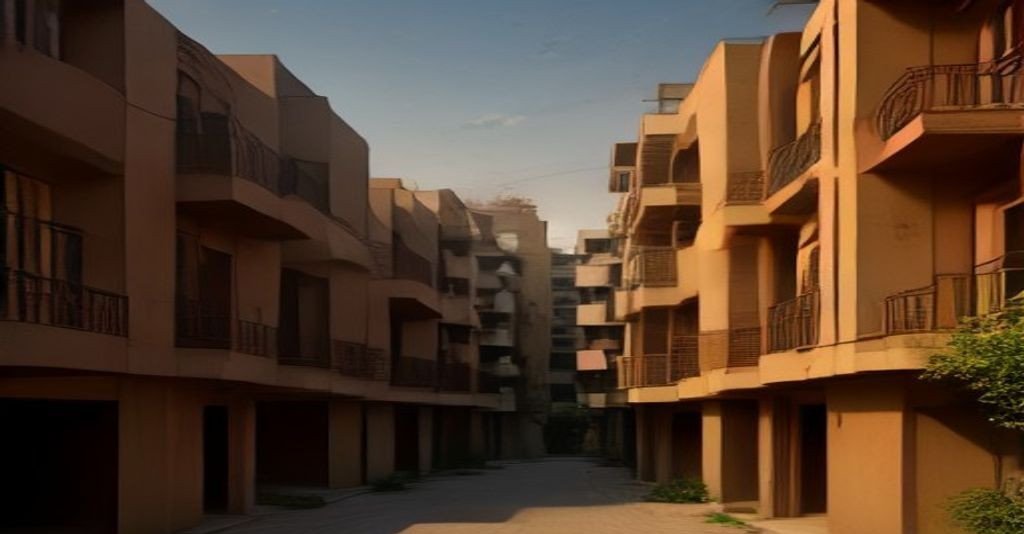
South Delhi builder floor prices in Category A colonies such as Panchsheel Park, Vasant Vihar and Shanti Niketan rose an estimated 20-21% year-on-year in the April-June 2026 quarter, according to market estimates from a SEBI-registered real estate fund. Delhi’s Master Plan 2047, notified in the Gazette of India on 20 August 2026, leaves the FAR, ground coverage and height rules that govern these plotted colonies largely unchanged — the redevelopment provisions it introduces apply mainly to DDA group-housing societies, not to independent builder floors. Buyers should treat the price data as broker estimates rather than registered transaction values, and verify current zoning and title independently before committing.
Key Takeaways
- Category A South Delhi colonies (Panchsheel Park, Vasant Vihar, Shanti Niketan, Golf Links, Jor Bagh, Sundar Nagar, Mayfair Garden) saw an estimated 20-21% year-on-year price increase in Q2 2026; Category B colonies (Greater Kailash, Chirag Enclave) rose a more moderate 6-10%.
- These figures come from Golden Growth Fund, a SEBI-registered real estate Alternative Investment Fund, and are explicitly described as market estimates, not registered sale-deed values — PropIntel treats them as directional, not definitive.
- MPD 2047 (notified 20 August 2026) does not change the FAR, ground coverage or “stilt plus four” height norms that apply to South Delhi’s private plotted colonies. It adds no new plotted-colony supply.
- The plan’s headline redevelopment change — cutting the minimum redevelopable area from 40,000 sq m to 3,000 sq m — applies to DDA group-housing societies, not independent builder floors. Conflating the two is a common and costly buyer mistake.
- Farmhouse-zone norms (relevant to Chhattarpur) have also changed in the notified plan; the practical effect on existing farmhouses is still being clarified and should be checked with a lawyer before any farmhouse-land transaction.
How Much Have South Delhi Builder Floor Prices Actually Risen?
The most-cited 2026 estimates come from Golden Growth Fund (GGF), a SEBI-registered Alternative Investment Fund, reported by Business Standard on 11 August 2026. GGF put a 6,000 sq ft floor in Category A colonies at roughly ₹40.5 crore in Q2 2025, rising to about ₹48.5 crore in Q2 2026, and a 2,500 sq ft floor rising from about ₹19 crore to ₹23 crore over the same period — a 20-21% year-on-year increase. Category B colonies, including Greater Kailash and Chirag Enclave, grew more slowly, at 6-10%.
Two caveats matter more than the headline number. First, GGF’s own reporting describes these as market estimates rather than registered transaction prices — actual registered sale-deed values in South Delhi are frequently understated relative to market value, and asking prices on property portals are not transaction prices either. Second, a 12-month price series from a single fund is a narrow evidence base; PropIntel would treat this as one data point supporting “estimated opportunity” for search and buyer interest, not as a verified market index. Buyers negotiating a specific floor should commission an independent valuation rather than anchoring to these averages.

Residential Plot — New Rajinder Nagar
Speak directly with Kshitiz Verma, Principal Partner, about this mandate.
- Plot Size312 sq. yds
- FeaturesCorner plot, 3-side open
What Delhi’s Master Plan 2047 Changes — and What It Doesn’t
Master Plan Delhi 2047 was approved by the Delhi Development Authority on 12 August 2026 and formally notified in the Gazette of India on 20 August 2026 under Section 11-A of the Delhi Development Act, 1957. It is now the operative statutory master plan for the capital.
Plotted colonies: no change to FAR, height or ground coverage
For South Delhi’s private plotted colonies — the GK blocks, Panchsheel Park, Vasant Vihar, Shanti Niketan, Anand Niketan, New Friends Colony, Maharani Bagh, Hauz Khas and Green Park among them — the notified plan does not alter the existing FAR table, ground coverage limits or the “stilt plus four” height regime that shapes today’s builder floors. No new plotted-colony land supply is being created. This matters for buyers: MPD 2047 will not add builder-floor inventory to these colonies, so any price effect from the plan is indirect, through general policy sentiment, not through a genuine supply change.
The “3,000 sq m unlock” is a group-housing story, not a builder-floor one
The plan’s most consequential residential change lowers the minimum redevelopable plot size for group-housing societies from 40,000 sq m to 3,000 sq m, making single-block society redevelopment financially realistic for the first time. This is a meaningful shift for DDA and cooperative group-housing societies in Delhi, but it is a different asset class from independent builder floors in private colonies. Some marketing material conflates the two; PropIntel’s advisory view is that they should be evaluated separately, since the redevelopment economics, approval process and buyer profile differ substantially.
Farmhouse zones: a threshold change that needs legal confirmation before any Chhattarpur transaction
Reporting on the notified plan describes a change to the minimum reference plot size and internal road width applicable to farmhouse zones — relevant to Chhattarpur, a micro-market South Delhi buyers frequently consider. Early industry commentary suggests a large share of existing farmhouse plots could fall outside the new conforming threshold, but this reading has not yet been confirmed against the DDA’s zonal development plan and building bylaws. PropIntel recommends against relying on any pre-verification claim about farmhouse conformity until a lawyer has checked the specific khasra/plot against the notified zonal plan.
Builder Floor vs Group-Housing Apartment: Which Suits Which Buyer
| Factor | Independent Builder Floor | Group-Housing Apartment |
|---|---|---|
| Land share | Direct, undivided share in a specific plot | Indirect, through the society/RWA |
| Redevelopment exposure | Not affected by the 3,000 sq m rule | Directly affected — redevelopment now more likely |
| Typical buyer | End-user or long-horizon HNI buyer wanting privacy and a smaller footprint | Investor or family wanting amenities, security and maintenance support |
| Price transparency | Lower — few registered comparables, wide price bands | Higher — more comparable unit-level transactions |
| Common risk | Unclear floor-wise ownership share, unauthorised construction, water/sewer connection disputes | Society dues, redevelopment consent disputes, builder delay |
This is not a claim that one option is definitively “better” — the right choice depends on the buyer’s holding period, appetite for maintenance involvement, and whether privacy or community amenities matter more.
Risks and Limitations Buyers Should Weigh
A builder floor purchase in South Delhi carries specific risks that a generic NCR due-diligence checklist may not fully capture: floor-wise ownership can be poorly documented where a plot has been informally subdivided; unauthorised or unsanctioned additional construction (a common issue on older plots) can complicate both financing and resale; and water, sewer and parking arrangements between floors are sometimes governed by informal understanding rather than a registered agreement. None of this means a given floor is unsuitable — it means each of these points needs specific verification, not a generic title check alone.
Buyer Due-Diligence Checklist for a South Delhi Builder Floor
- Confirm the seller’s floor-wise title is registered and distinct from other floors on the same plot, not merely an internal family arrangement.
- Check the sanctioned building plan against the actual constructed structure for unauthorised additions (a common issue that can block home-loan approval).
- Verify current property tax (MCD) payment status and any pending demand notices tied to the plot.
- Confirm parking, terrace and water-tank rights are documented in the sale deed, not assumed by convention.
- Ask for the encumbrance certificate covering at least the last 13 years, and cross-check it against the registered sale-deed chain.
- If the plot sits in or near a farmhouse zone (e.g., parts of Chhattarpur), have a lawyer confirm current zonal conformity before paying token money.
This checklist covers issues specific to South Delhi’s plotted colonies; for the broader title, RERA and registration checks that apply across the region, see PropIntel’s Property Due Diligence Checklist for Delhi-NCR Buyers, which this article supplements rather than repeats.
Conversational Questions Buyers Are Asking
Buyers researching this topic are typically asking: Is a builder floor a good investment in South Delhi right now? What is the real difference between a builder floor and an apartment in terms of ownership? Will MPD 2047 bring more supply to Greater Kailash or Panchsheel Park? Are Chhattarpur farmhouses still buildable under the new plan? Should I buy in a Category A or Category B colony if my budget is fixed? This article addresses each of these directly rather than leaving them to inference.
PropIntel Perspective
The evidence supports cautious interest in South Delhi builder floors, not urgency. Reported price increases are estimates from one fund, not a verified index, and MPD 2047 does not add plotted-colony supply — so scarcity, not new policy, is the primary driver PropIntel can currently point to. This suits a long-horizon end-user or HNI buyer who values a specific colony and floor-wise privacy, more than a short-horizon investor seeking a policy-driven catalyst. The principal risks are unauthorised construction and unclear floor-wise title, both fully checkable before purchase, alongside the general NCR title and RERA checks covered in PropIntel’s due-diligence checklist. Buyers should independently verify sanctioned building plans and zonal status rather than relying on marketing claims tied to the new Master Plan, and a farmhouse-zone purchase in particular should wait for explicit legal confirmation of conforming status. This is general observation on publicly available information, not a recommendation to transact.
Buyers evaluating a specific South Delhi floor, or comparing it against options in Gurgaon or Noida, are welcome to bring PropIntel their shortlist for an independent, advisory-only review — we do not sell inventory or take developer commissions. See how a related infrastructure-led NCR market is evolving in PropIntel’s review of Noida International Airport’s impact on property prices.
Frequently Asked Questions
Is a builder floor a good investment in South Delhi in 2026?
It can suit end-users and long-horizon buyers who value privacy and a specific colony, but reported price gains are fund estimates, not verified transaction data, and returns are not guaranteed. Independent valuation and title verification are essential before deciding.
What is the difference between a builder floor and an apartment in South Delhi?
A builder floor gives the buyer a more direct interest tied to a specific plot and floor, with fewer shared amenities and less transparent pricing, while a group-housing apartment sits within a society structure with more comparable transaction data and, under MPD 2047, greater redevelopment potential.
Does Delhi’s Master Plan 2047 add more builder floors to South Delhi?
No. The notified plan leaves plotted-colony FAR, ground coverage and height rules unchanged, so it does not create new builder-floor supply in colonies like Greater Kailash or Panchsheel Park.
Are Chhattarpur farmhouses affected by the new Master Plan?
The notified plan appears to change the reference plot size and road-width norms applicable to farmhouse zones. The precise effect on existing plots has not been officially clarified, so any Chhattarpur farmhouse transaction should wait for specific legal confirmation of zonal conformity.
Which South Delhi colonies are Category A versus Category B for pricing purposes?
Category A, per the fund data cited above, includes Panchsheel Park, Vasant Vihar, Shanti Niketan, Golf Links, Jor Bagh, Sundar Nagar and Mayfair Garden. Category B includes colonies such as Greater Kailash and Chirag Enclave. This is a market classification used for the cited price estimates, not an official designation.
Sources and Methodology
- Business Standard, “South Delhi luxury floors near ₹50 crore as prices rise up to 21% in a year,” 11 August 2026 (data attributed to Golden Growth Fund, a SEBI-registered AIF)
- Business Standard, “DDA pushes back 2041 deadline, approves Master Plan Delhi 2047,” 12 August 2026
- Business Standard, “Delhi Master Plan 2047 targets 4 mn flats, mixed-use transit-led growth,” 20 August 2026
- Delhi Development Authority, Master Plan for Delhi – 2047, official gazette text (dda.gov.in)
- Business Upturn, “Delhi Master Plan 2047 gets Gazette notification, formalising long-term urban framework”
- PropIntel analysis of the above sources; all price figures are explicitly attributed as fund/broker estimates, not registered transaction values.
Information reviewed on: September 12, 2026 · Recommended review date: December 11, 2026 · Reviewed by Kshitiz Verma, Principal Partner, PropIntel