
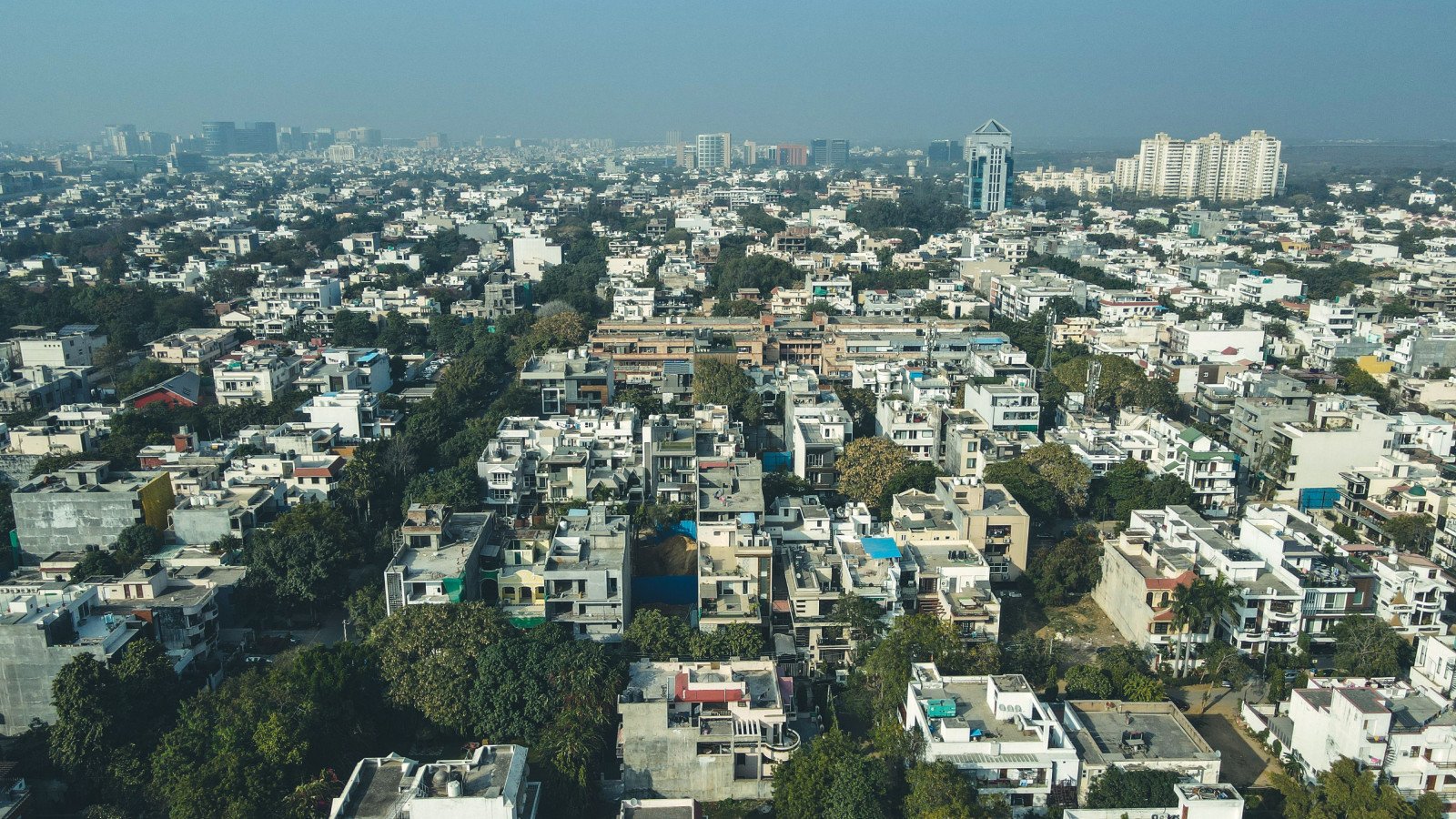

As of 22 October 2026, fresh approvals for stilt-plus-four (S+4) independent floors in Gurugram are frozen, not permanently banned. A Haryana Town and Country Planning (TCP) Department memo dated 21 July 2026 put all new S+4 building-plan approvals and online portal submissions on hold “till further orders,” following a Punjab and Haryana High Court interim stay on 2 April 2026 that found the state had prioritised revenue over public safety. The freeze applies to new sanctions, not automatically to floors that already hold a valid, pre-stay approved building plan — but every buyer, seller and existing owner now needs to verify that status individually rather than rely on a builder’s assurance.
PropIntel is a boutique real estate advisory covering Gurugram, Delhi-NCR, Noida, Goa and senior-living transactions. Gurugram’s “independent floor” or “builder floor” market — low-rise residential units built on plotted land in Haryana Shahari Vikas Pradhikaran (HSVP, formerly HUDA) sectors and licensed colonies — has for years offered buyers a lower-maintenance, lower-density alternative to high-rise apartments. The stilt-plus-four format, which adds a fourth residential floor above a stilt reserved for parking, has been at the centre of a regulatory tug-of-war since 2017. This article sets out exactly where that dispute stands today, distinguishes the Haryana government’s administrative order from the High Court’s judicial stay, and tells buyers and sellers what to verify before any transaction involving an S+4 floor in Gurugram.
Key Takeaways
- A TCP Department memo (21 July 2026) suspended all fresh S+4 building-plan approvals in Gurugram “till further orders” and disabled the dedicated online S+4 approval portal.
- The Punjab and Haryana High Court stayed Haryana’s 2 July 2024 S+4 re-notification on 2 April 2026, in Sunil Singh v. State of Haryana and connected matters, citing risk to public safety from inadequate civic infrastructure.
- On 27 April 2026, the High Court clarified that its stay applies only within Gurugram district, not statewide — a distinction that matters if you are evaluating a floor in Panchkula, Faridabad or elsewhere in Haryana.
- Authorities issued roughly 2,000 enforcement notices in Gurugram for stilt-area misuse and road encroachment following an April 2026 TCP enforcement directive.
- Current public reporting indicates no demolition order has been issued against legally sanctioned S+4 structures, but this is an active, evolving matter before the courts — not a settled position.
What Is a Stilt-Plus-Four Floor, and Why Does Gurugram Have So Many?
A stilt-plus-four building reserves its ground level (“stilt”) purely for vehicle parking and stacks up to four independently owned residential floors above it, each usually sold as a separate “builder floor” unit. Haryana first permitted the format in 2017 on plots with 10-metre-plus road access, extending what had been a two-and-a-half or three-floor norm in HSVP sectors and licensed colonies. It caught on quickly: a 2023 developers’ association survey counted roughly 3,500 registered builder-floor units across eight licensed colonies and five HSVP sectors at that time (historical context only, not a current count). For end users, the appeal is simple — independent floors cost a fraction of a high-rise’s maintenance and offer more privacy than a large group-housing society.

Conscient Asaya — Goa — Branded Development
Speak directly with Kshitiz Verma, Principal Partner, about this mandate.
Branded villa development in North Goa. Ask for current inventory and pricing.
Timeline: How Haryana’s S+4 Policy Got Here
| Date | Development |
|---|---|
| 2017 | Haryana first permits stilt-plus-four construction on residential plots with 10-metre-plus road access. |
| 22 Feb 2023 | State government puts all fresh S+4 building-plan approvals “in abeyance” after sustained opposition from resident welfare associations citing water, drainage, electricity, parking and road-width strain. |
| Jun 2023 | An expert committee headed by P. Raghavendra Rao recommends conditional revival, subject to infrastructure audits and density limits. |
| 2 Jul 2024 | TCP Department re-notifies S+4, now capped at stilt-plus-three dwelling floors with an 18-persons-per-plot density limit, mandatory neighbour NOC or setback, and conditions tied to road width — making roughly 3.23 lakh plots across Haryana newly eligible. |
| 2 Apr 2026 | Punjab and Haryana High Court grants an interim stay on the 2 July 2024 notification in Sunil Singh v. State of Haryana, citing an infrastructure-capacity audit that was allegedly never carried out and road widths in colonies such as DLF Phase-I, Sector 28 found to be under half the prescribed standard. |
| 17 Apr 2026 | TCP directs enforcement action against stilt-area misuse and road encroachment across Haryana; roughly 2,000 notices follow in Gurugram over the following weeks. |
| 27 Apr 2026 | High Court clarifies the 2 April stay applies exclusively to Gurugram district, describing its interim orders as “always prospective in nature,” and defers builders’ request to vacate the stay to a later hearing. |
| 21 Jul 2026 | TCP memo freezes all fresh S+4 approvals and disables the online approval portal in Gurugram “till further orders.” |
Table compiled by PropIntel from contemporaneous reporting cited in Sources and Methodology below. Treat every row describing litigation as subject to change at the next hearing.
What’s Actually Happening in Gurugram Right Now
Three separate things are true at once, and conflating them is the most common buyer mistake. The High Court’s stay is a judicial, interim measure on the legality of the 2 July 2024 notification — it has not ruled on the policy’s merits, and a later hearing will consider builders’ request to vacate it. The TCP Department’s 21 July 2026 memo is a separate administrative freeze on new applications, citing the online self-certification system under finalisation and “administrative exigencies” — it does not itself declare the policy illegal. Enforcement against stilt-parking misuse and road encroachment is a third, ongoing municipal exercise that predates and continues alongside both. Current reporting indicates sanctioned S+4 buildings have not been ordered demolished and residents are not being asked to vacate — but this is live litigation, and any specific floor’s status should be checked against its own building-plan file, not general news coverage.
Does the Stay Apply Outside Gurugram?
No — the High Court’s 27 April 2026 clarification confines the 2 April stay to Gurugram district specifically. A floor in Panchkula, Faridabad or another Haryana district sits under a separate, earlier history of its own (Panchkula, for instance, had its own 2023 embargo dispute) and needs independent verification; do not assume the Gurugram position applies statewide, and do not assume it does not.
What This Means If You Are Buying, Selling or Already Own an S+4 Floor
Buying resale: ask for the sanctioned building-plan approval letter and its date; a plan sanctioned before the relevant stay or freeze stands on materially firmer ground than one still “in process.” Buying new-launch or under-construction S+4 inventory: treat any claim of a pending or imminent approval with real caution, since the fresh-approval portal has been disabled since 21 July 2026 with no published resumption date. Selling: expect buyers’ lawyers to demand the approval paper trail; incomplete documentation now costs more time than it did a year ago. Already own a floor: current reporting does not suggest demolition risk for a legally sanctioned structure, but an enclosed or converted stilt-parking area remains a live target of ongoing enforcement.
Buyer Due-Diligence Checklist for an Independent Floor in Gurugram (2026)
- Obtain and verify the sanctioned building-plan approval copy and its exact date from the Town and Country Planning Department or HSVP, not from the builder’s marketing brochure.
- Confirm the plot’s approach-road width meets the 10-metre threshold used in S+4 eligibility criteria.
- Check whether the specific building has received any stilt-misuse or encroachment notice as part of the 2026 enforcement drive.
- Ask whether the plot or colony falls within Gurugram district specifically, since the current High Court stay is geographically limited.
- Request the occupancy certificate, and confirm it matches the sanctioned plan rather than a later, unapproved addition.
- Have a property lawyer check the current status of Sunil Singh v. State of Haryana and connected matters before signing any agreement contingent on a pending S+4 sanction.
- Avoid paying token or advance money against a floor whose S+4 approval is still “in process,” given the indefinite freeze on fresh approvals.
Who This Suits — and Who Should Wait
A resale floor with a complete, pre-freeze sanctioned building plan, a clean occupancy certificate and no outstanding enforcement notice remains a reasonable option for an end user who has verified the paperwork independently. A new-launch project still awaiting S+4 sanction, or one where the developer cannot produce a dated approval letter, is a materially different risk today than it was before July 2026 — buyers there are better served waiting for either the High Court’s substantive ruling or a published resumption of fresh approvals, rather than relying on a sales team’s optimism about timelines neither the court nor the TCP Department has committed to.
Frequently Asked Questions
Is stilt-plus-four construction banned in Gurugram?
No. Fresh approvals are frozen by a TCP Department memo (21 July 2026) and a High Court stay limited to Gurugram district (2 April 2026, clarified 27 April 2026). Neither order amounts to a permanent, final ban, and the litigation is ongoing.
Can I still buy an existing stilt-plus-four floor in Gurugram?
You can, but you must verify that the specific floor’s building plan was sanctioned before the relevant freeze and carries a valid occupancy certificate with no outstanding stilt-misuse notice. Current reporting does not indicate demolition risk for legally sanctioned structures, but this should be confirmed for your specific property, not assumed.
What is the Sunil Singh v. State of Haryana case about?
It is the Punjab and Haryana High Court matter in which residents challenged Haryana’s 2 July 2024 notification re-permitting stilt-plus-four construction, arguing the state skipped an infrastructure-capacity audit. The court granted an interim stay on 2 April 2026 and has not yet issued a final ruling on the policy’s legality.
Does the High Court stay apply across all of Haryana?
No. The court clarified on 27 April 2026 that its stay applies exclusively to Gurugram district. Status elsewhere in Haryana should be verified separately and not assumed to mirror Gurugram’s position.
What happens if a stilt parking area has been converted into a room or shop?
Converted or enclosed stilt areas are a specific target of the 2026 enforcement drive, which has already resulted in roughly 2,000 notices in Gurugram. A buyer should check for any such notice against the specific building before proceeding.
PropIntel Perspective
The practical lesson from Gurugram’s stilt-plus-four saga is that a plotted-colony “independent floor” carries a regulatory-history risk that a high-rise apartment, governed by a single RERA-registered project approval, generally does not. This suits a buyer willing to do floor-specific, paper-trail verification rather than rely on area reputation or a builder’s timeline promise. The principal trade-off is between resale floors with clean, dated approvals — a reasonably defensible purchase — and new-launch inventory still awaiting sanction, where nobody, including the Haryana government, has published a date for when fresh approvals resume. Buyers under no immediate pressure to transact may find waiting for the High Court’s substantive hearing more defensible than meeting a sales deadline. This is general market information, not a recommendation to buy, hold or avoid any specific property.
Sources and Methodology
Information reviewed on: 22 October 2026. This article distinguishes the Haryana TCP Department’s administrative orders from the Punjab and Haryana High Court’s judicial stay throughout, and relies on contemporaneous reporting by The Tribune (22 July 2026) on the TCP freeze memo; The Tribune (27 April 2026) on the court’s Gurugram-only clarification; The Week (3 April 2026) and The Daily Pioneer on the 2 April 2026 High Court stay; and The Tribune (11 May 2023) for the historical builder-floor count used only as dated background. Recommended review: within 60 days, or immediately upon the next High Court hearing in this matter, given the active litigation.
Author: PropIntel Research Desk, in consultation with PropIntel’s Gurugram advisory team. Reviewed for regulatory accuracy by PropIntel’s due-diligence lead. Published 22 October 2026; last reviewed 22 October 2026. This article is general information, not legal advice. Readers should verify the current status of any specific floor’s approval with the Haryana Town and Country Planning Department or HSVP, and obtain independent legal advice, before entering into any transaction involving a stilt-plus-four property.
Related PropIntel Reading
- SCO Plots in Gurgaon: A 2026 Investment and Legal Due-Diligence Guide
- New Launches in Sector 63A, Gurugram: What Buyers Must Verify Before Booking
- RERA Possession Delay: What Compensation Can You Claim?
- Property Due Diligence Checklist for Delhi-NCR Buyers
- Gurugram’s 2026 New-Launch Boom: A Buyer’s Due-Diligence Guide
For an independent review of a specific Gurugram independent-floor purchase, speak with PropIntel’s advisory team.